

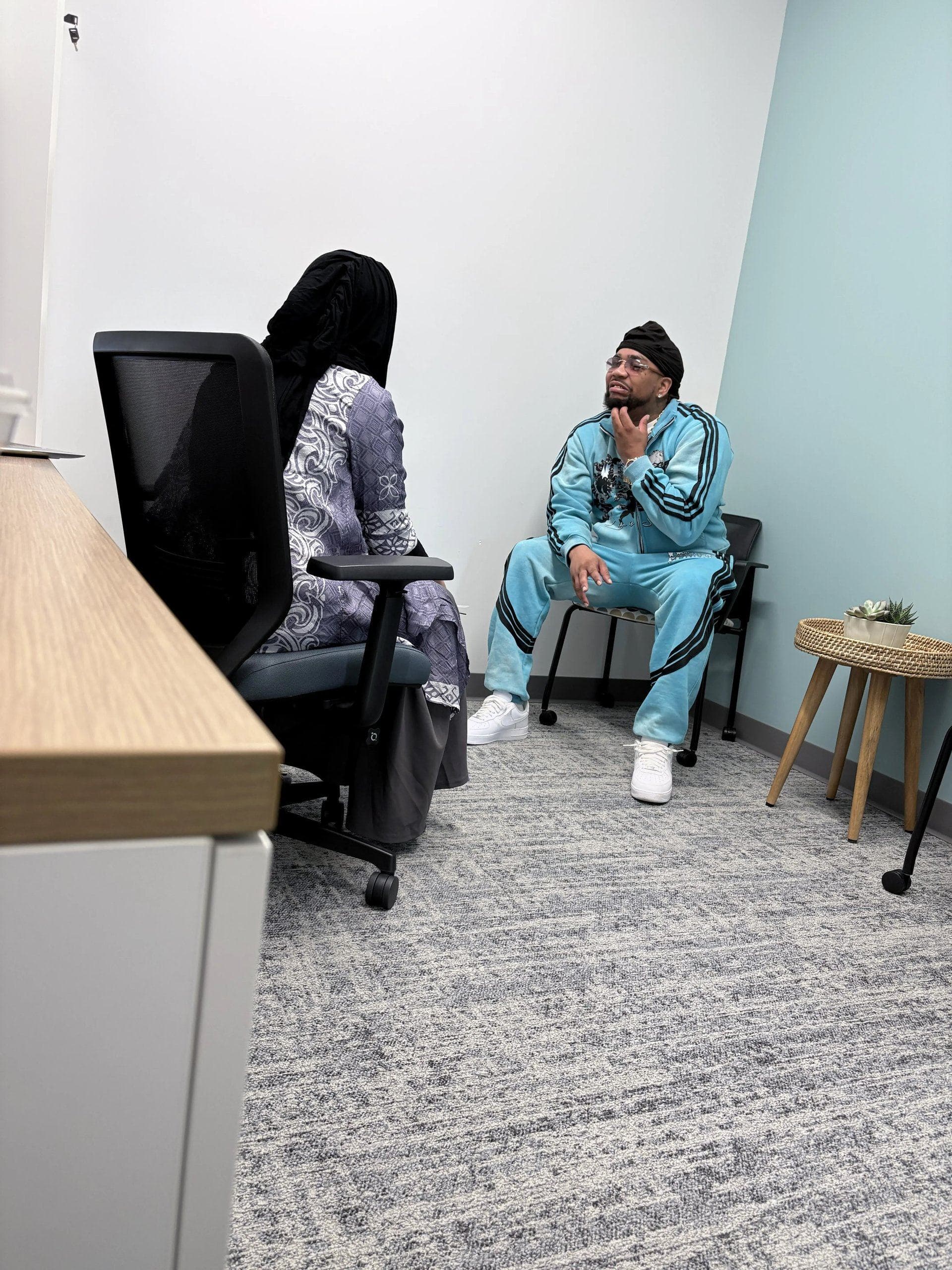

The other day, Milwaukee’s most famous—or at least hottest—viral sensation, Steve Da Stoner, contacted me seeking help for PTSD.
I’ve known Steve for several years and have had many candid conversations with him about his power and his ability to influence our community and the world. Like the rest of us, Steve was born into a city shaped by conflict and chaos. The impact of that environment has placed a strain on his emotions, relationships, and decision-making.
I appreciated his thoughtfulness in reaching out. More importantly, I recognized that Steve, like so many young people of his generation, is a product of the world he inherited. I often tell young men and women Steve’s age that they are sort of like refugees. Black institutions, leaders and cultural practices were critically weakened during the War on Drugs.
When he called, I immediately reached out to colleagues at Milwaukee County’s Department of Health and Human Services. Since David Crowley’s 2020 election as County Executive, the county has embraced new ideas about how to address the social determinants of health.
Unlike the era in which I came of age, when it was clear that the system was stacked against us, the last six years have brought new and innovative approaches to addressing trauma at an institutional level.
My colleagues recommended that I take Steve to the Medical College of Wisconsin’s Trauma Recovery center located at ThriveOn King. Wisconsin’s first of a kind trauma-focused services connected to the Medical College of Wisconsin.
Located in the heart of Bronzeville, ThriveOn King represents something important: a more accessible and welcoming approach to care for people like Steve, who, like many Black men, have experienced trauma and developed a deep distrust of large institutions.
What happened next was remarkable.
Steve’s therapist had no idea who he was. She hadn’t seen him dancing with Kai Cenat or watched NFL players celebrate touchdowns using his dance moves. She didn’t know that his videos had reached millions of people around the world.
And none of that mattered.
Within an hour and fifteen minutes, she helped Steve begin to refocus, confront years of emotional pain, and identify new practices for managing the trauma he has carried for much of his life.
Because Steve asked me to sit in on the session, I was able to witness this process firsthand. I won’t share the details of what he discussed. Those are his stories to tell.
But I will say this: his story was painfully familiar.
After decades of working with young people, students, and youth incarcerated in our correctional facilities, I have heard versions of Steve’s story countless times. Young Black men navigating environments shaped by violence, instability, poverty, and institutions that too often punish their responses to trauma rather than address its causes.
As Steve began to release some of the emotional baggage he had been carrying, I couldn’t help but shed a tear.
Here was a young man whose creativity had brought joy to millions, whose influence extended far beyond Milwaukee, and whose platform had generated more than 100 million views. Yet behind the viral dances and infectious personality was someone still wrestling with experiences that had shaped his decisions and his understanding of himself.
I’ve been here before.
Over the years, I’ve worked with rappers and entertainers as they entered adulthood, attempting to reclaim control over decisions they made in their youth. I’ve watched young men who were once fenced in by the criminal justice system grow into adults whose creativity and talent put smiles on the faces of millions—perhaps even billions—of people around the globe.
Steve possesses that same star power.
But talent, fame, and influence cannot erase trauma. And viral success does not automatically create the emotional stability necessary to sustain a career, build healthy relationships, or navigate adulthood.
The truth is that the path toward healing is deeply personal. While family, friends, and community can offer encouragement, no one can walk that path for another person.
That is why places like MCW’s Trauma Recovery Center at ThriveOn King matter.
They represent the possibility of creating institutions that meet people where they are, recognize their humanity, and provide the tools necessary to begin healing.
For too long, Milwaukee has been a city where young Black men are more likely to encounter institutions through punishment than through care. We have become accustomed to watching their struggles play out publicly while rarely asking what resources might help them address the pain beneath their behavior.
Steve’s willingness to seek help offers a different possibility.
It reminds us that the same young people we sometimes dismiss, criticize, or reduce to their worst decisions are capable of reflection, growth, and transformation.
I believe Steve has what it takes to continue that journey. His creativity has already demonstrated his ability to connect with people across racial, geographic, and generational boundaries.
Imagine what he might accomplish if he can continue to confront the trauma that has shaped his life.
And perhaps, in doing so, he can become an example for the rest of us—especially those who have spent our lives navigating systems that have too often failed to protect us.

Robert "Biko" Baker III, Ph.D. (UCLA, History), works at the intersection of culture, tech, and public engagement. A former contributor to The Source and Vibe, he later served as national executive director of the League of Young Voters, leading high-profile civic campaigns and collaborations, including the launch of No Guns Allowed with Snoop Dogg and Ron Conway. He has advised and served on boards for organizations including CIRCLE at Tufts and Sankofa.org, and was named to the NAACP’s “40 Under 40.” Biko is currently Operations Manager for WNOV 860AM/106.5FM and the Milwaukee Courier Newspaper.